Spondylolisthesis Treatment
Spondylolisthesis is a condition where one of the vertebrae in the spine slips forward over the one below it, most commonly in the lower back. It can cause a persistent lower back ache, tight hamstrings and, in some cases, pain that travels into the legs. Some people barely notice it, while for others standing, walking or bending for any length of time becomes a real struggle.
What Causes Spondylolisthesis?
There are a few different types, and the cause often depends on your age and activity levels. In younger, active people, it usually follows a stress fracture in a small section of the vertebra called the pars interarticularis. This is common in sports that involve repeatedly arching the back, such as gymnastics, fast bowling and dance.
In older adults, degenerative spondylolisthesis is more typical. Wear and tear in the discs and facet joints allows the vertebra to slip gradually over time. This can narrow the space around the nerves and is closely linked to spinal stenosis.
Signs to look out for include:
- Lower back pain that’s worse when standing or leaning backwards
- Tight hamstrings
- Pain, numbness or tingling in the buttocks or legs
- Relief when sitting down or bending forwards

Our Treatment for Spondylolisthesis
Most people with spondylolisthesis can manage it well without surgery. Physiotherapy focuses on building strength and control in the muscles that support your spine, particularly the deep abdominals, glutes and back muscles. We’ll start with gentle core and mobility work, then gradually progress to exercises that reflect your daily life, whether that’s lifting the shopping or getting back on the pitch.
Manual therapy and massage therapy can ease the muscle tension in the lower back and hamstrings that often builds up as your body tries to protect the spine. For younger athletes and active adults, sports therapy plays a key role once symptoms settle, rebuilding sport-specific strength and refining technique to reduce stress on the lower back. Your physio will also give clear advice on posture and activity, so you know what to modify and what’s safe to keep doing.
If you develop significant leg weakness, or your symptoms don’t improve with conservative care, we’ll refer you for further investigation.
“After suffering with lower back pain for years and having unsuccessful treatment, I was so happy to find Caitlin! She has helped me make a quick recovery, gave me exercises I could do alongside my existing training at the gym and helped me get back to running with no pain at all.” Amy Beswick – Sale

Why Choose True Physio?
Expert Physiotherapy Team
All of our Physiotherapists are registered with the Health and Care Professions Council (HCPC), which means that they fulfil the highest standards of practice required by law. They are also a part of the Chartered Society of Physiotherapy (CSP), demonstrating our commitment to delivering outstanding expertise.
Initial Assessment
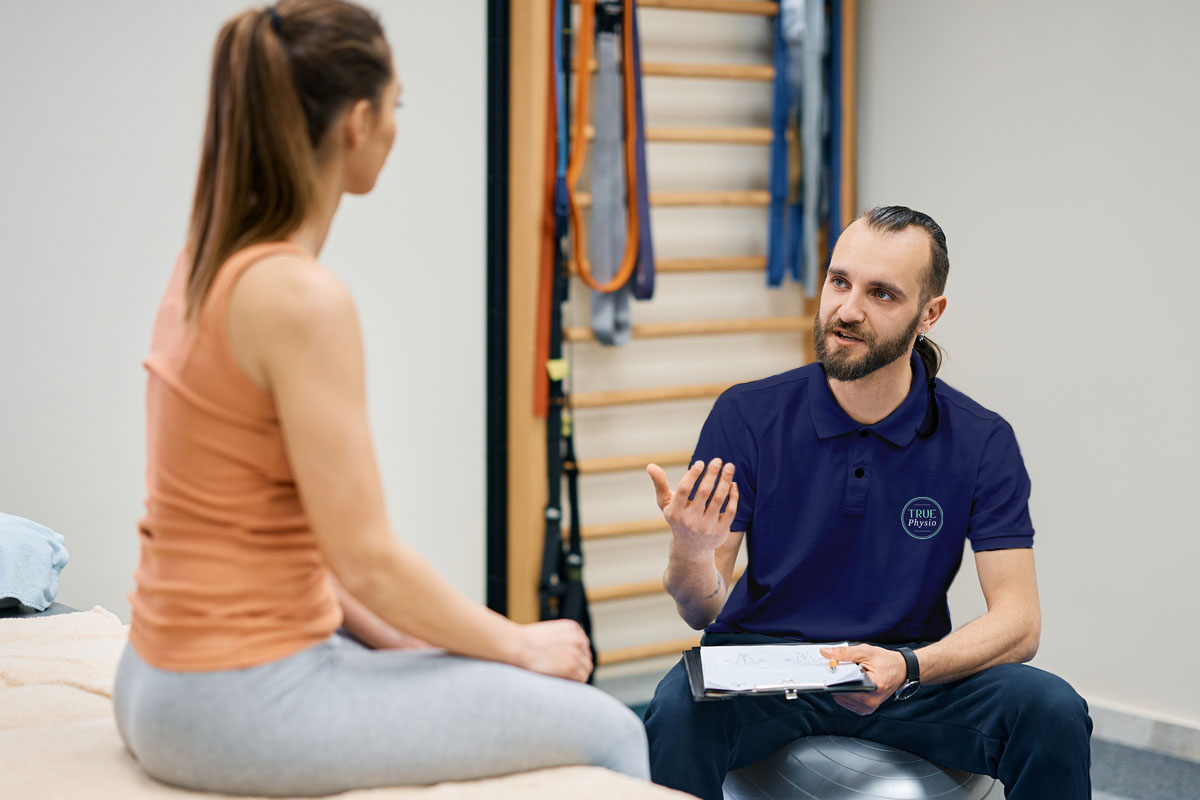
At your initial assessment at True Physio, we will find out where your pain comes from and what your goal is before forming a plan to help you achieve that. Our clinicians will take the time to understand your condition, do a detailed assessment, and explain to you the nature of the problem you have. Treatment plans are created with your lifestyle in mind.
Book your appointment now or contact your nearest True Physio clinic to discuss how we can help.
Book Now