Osgood-Schlatter Disease Treatment
Growing Pains in Young Athletes
Osgood-Schlatter disease develops at the growth plate where the patellar tendon attaches to the shinbone, just below the knee. During growth spurts, bones grow faster than muscles and tendons can stretch, creating tension at this attachment point. Add in repetitive running, jumping, and kicking from sports, and you have a recipe for inflammation and pain at that vulnerable growth plate. It’s particularly common in young athletes involved in football, basketball, gymnastics, and running.
While the name sounds serious, it’s important to understand that Osgood-Schlatter disease isn’t actually a disease, it’s a temporary condition that resolves once your child finishes growing. However, that doesn’t mean the pain should be ignored or that your child needs to just push through it. With proper management through physiotherapy, young athletes can continue participating in sports while allowing the condition to settle, avoiding long-term complications.
Book Now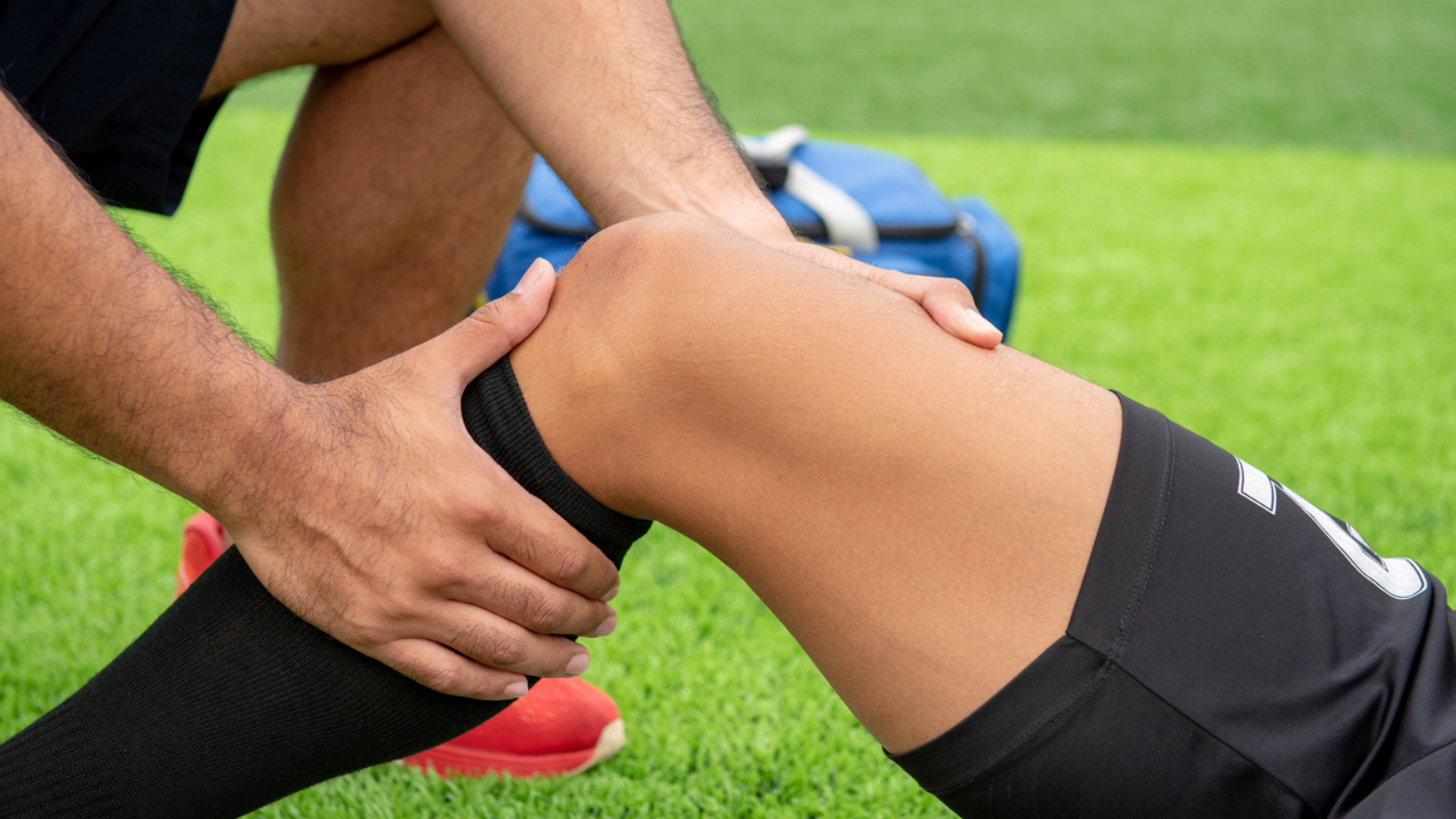
Osgood-Schlatter Disease Symptoms include
- Pain and tenderness just below the kneecap, at the tibial tubercle
- Pain that worsens with activity (running, jumping, squatting) and eases with rest
- Swelling at the tibial tubercle
- A bony bump just below the kneecap (can become permanent)
- Tight quadriceps/thigh muscles
- Pain when kneeling, climbing stairs, or bending the knee repeatedly
- Usually affects one knee, though can occur in both
The first challenge is finding the right balance between rest and activity. Complete rest isn’t usually necessary or beneficial – in fact, stopping all activity can lead to deconditioning that makes return to sport harder. Instead, your physiotherapist helps you and your child understand activity modification. This might mean reducing training volume, avoiding the most aggravating activities temporarily, or ensuring proper warm-up and cool-down routines.
Physiotherapy treatment focuses on stretching the quadriceps and hamstrings to reduce tension on the growth plate, alongside strengthening exercises to better support the knee. Ice after activity helps manage inflammation, and some children benefit from wearing a strap just below the knee during sport.
We also review training loads and technique, are they doing too much too soon, or landing with poor mechanics? Sports therapy can identify and correct movement patterns contributing to excessive stress on the knee. Education is key too, so both you and your child understand the condition and have realistic expectations around recovery.
Why Choose True Physio for Recovery?
The frustrating thing about Osgood-Schlatter disease is that it doesn’t have a quick fix. The condition typically takes several months to settle, and symptoms often fluctuate as your child continues growing and staying active. Most cases resolve completely once growth plates close, usually by age 14-18. The key is managing symptoms in the meantime so your child can continue participating in sports they love while avoiding making the condition worse.
The vast majority of young people with Osgood-Schlatter disease make complete recovery with no long-term issues. Some are left with a prominent bump below the knee, but this is painless and purely cosmetic. Rarely, the condition can lead to complications if not managed properly, which is why working with a physiotherapist who understands growing athletes is valuable. Book an appointment and let’s help your young athlete manage their knee pain.
Book Now