Lumbar Disc Herniation
What is Lumbar Disc Herniation?
Lumbar disc herniation affects the lower spine and can cause lower back pain that sometimes travels into the buttock or down the leg. It happens when one of the discs between the spinal bones becomes irritated or bulges outward, placing pressure on nearby nerves.
This may develop gradually through repeated strain or occur suddenly after lifting or twisting. Some people experience sharp nerve pain, while others notice stiffness, weakness or altered sensation.
Symptoms vary. For some, discomfort is manageable, but for others pain can disrupt sleep, work and confidence in movement. Early assessment helps determine whether a lumbar disc herniation is contributing to your symptoms and what support is most appropriate.
Book Now
How Lumbar Disc Herniation Is Treated
Treatment for lumbar disc herniation focuses on reducing pain, settling nerve irritation and restoring confident movement. Most cases improve with structured physiotherapy and do not require surgery.
An assessment identifies how irritated the disc and nerves are and guides a personalised plan.
Lower back physiotherapy combines hands-on treatment with targeted exercises to improve spinal support and control. Exercises are introduced gradually and adjusted as symptoms settle.
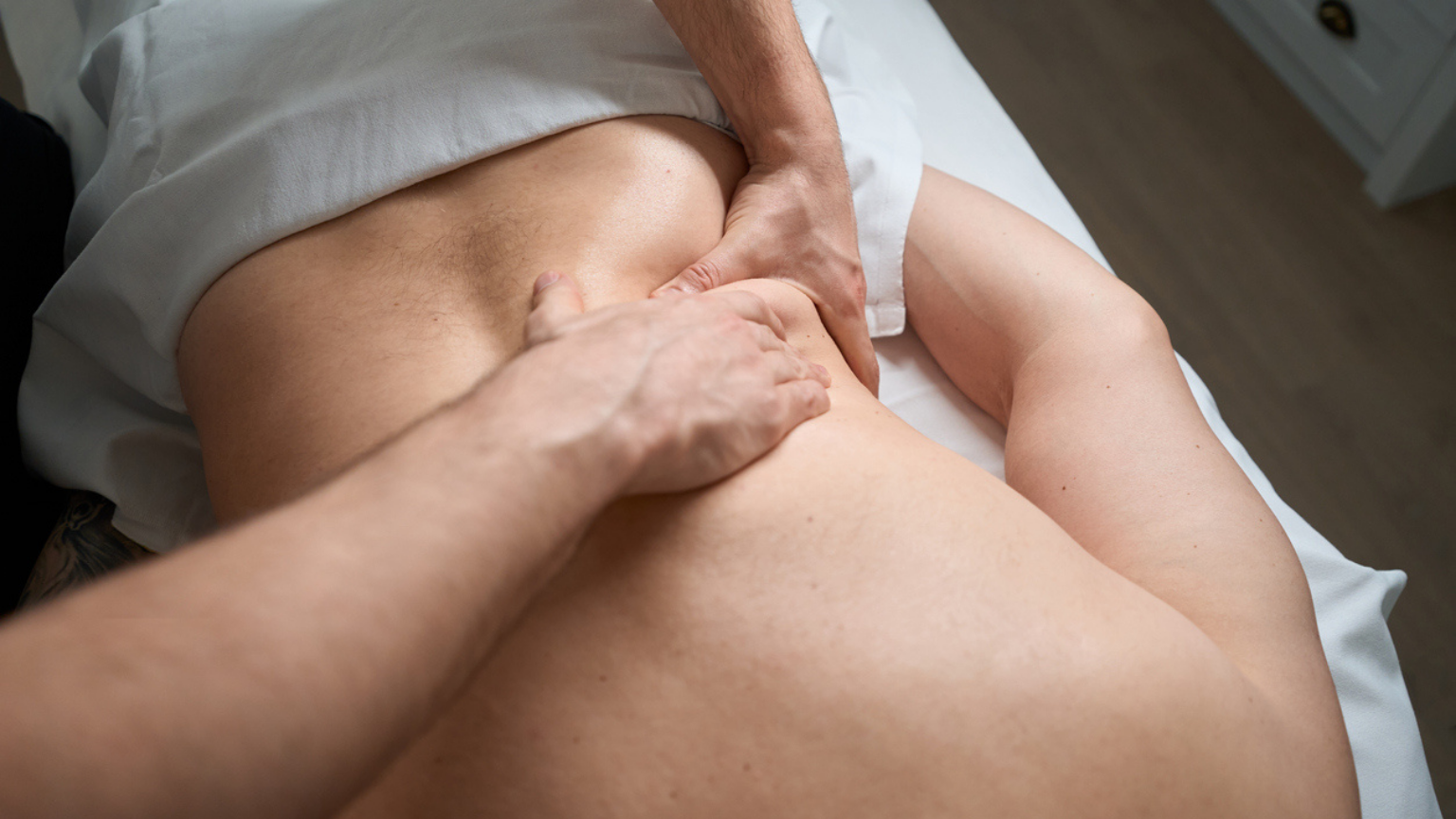
Where appropriate, sports massage may be used to ease muscle tension around the lower back and hips. Many people benefit from a combined physio and massage approach, particularly during flare-ups.
You’ll also receive practical strategies to support lasting backache pain relief and help prevent future flare-ups.
How To Start Your Recovery
Lumbar disc herniation can feel worrying, especially when pain travels into the leg or affects sleep. A thorough assessment helps identify how irritated the disc and nerves are and what stage of recovery you are in.
At True Physio, our experienced physiotherapists provide personalised lower back physiotherapy tailored to your symptoms and goals. We are AXA approved Physiotherapists and deliver evidence-led care across 9 clinics throughout the North of England.
Treatment may combine physiotherapy, structured rehabilitation and, where appropriate, shockwave therapy to support recovery. If symptoms are limiting your work or daily life, booking an assessment is the first step towards steady improvement.
Book Now